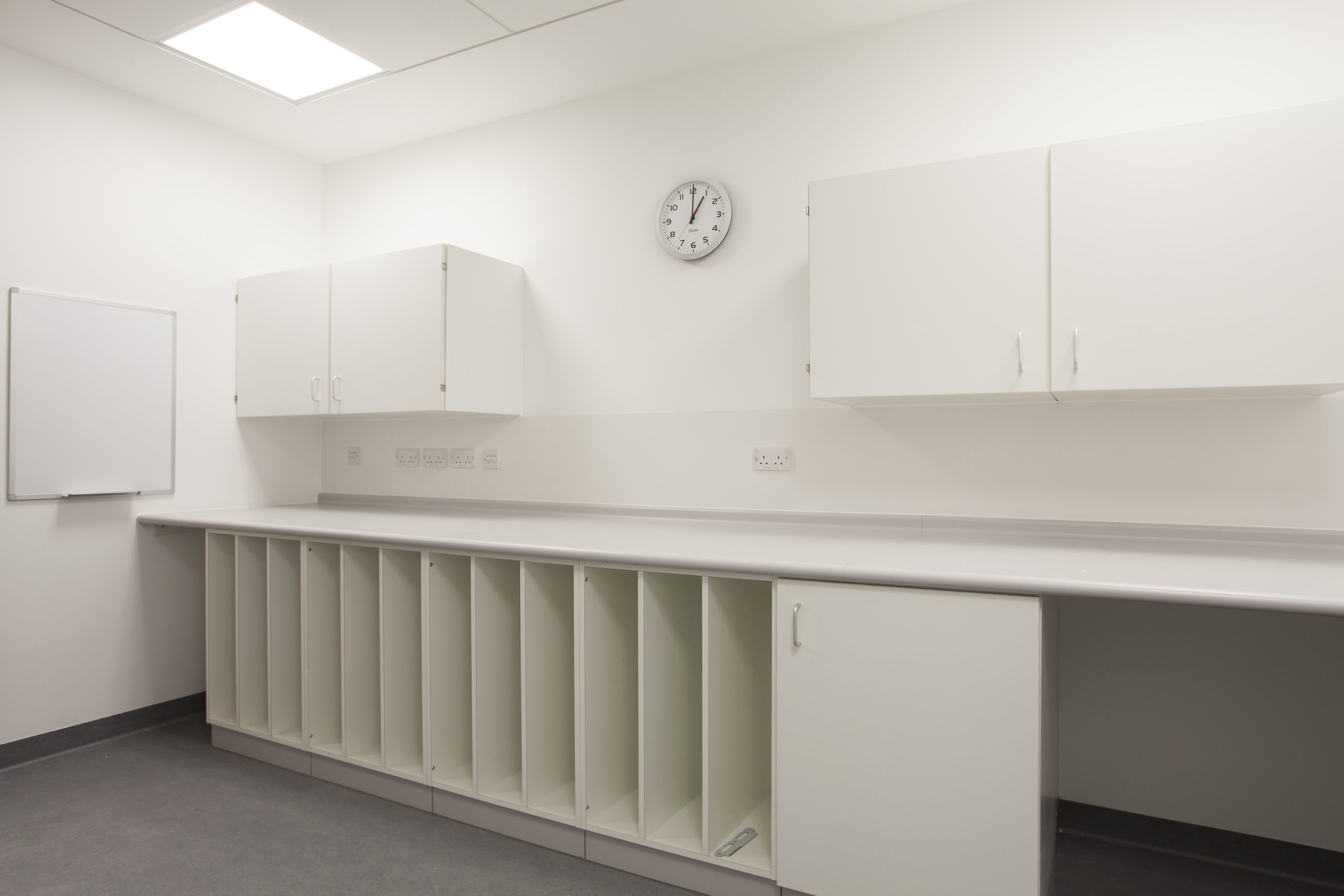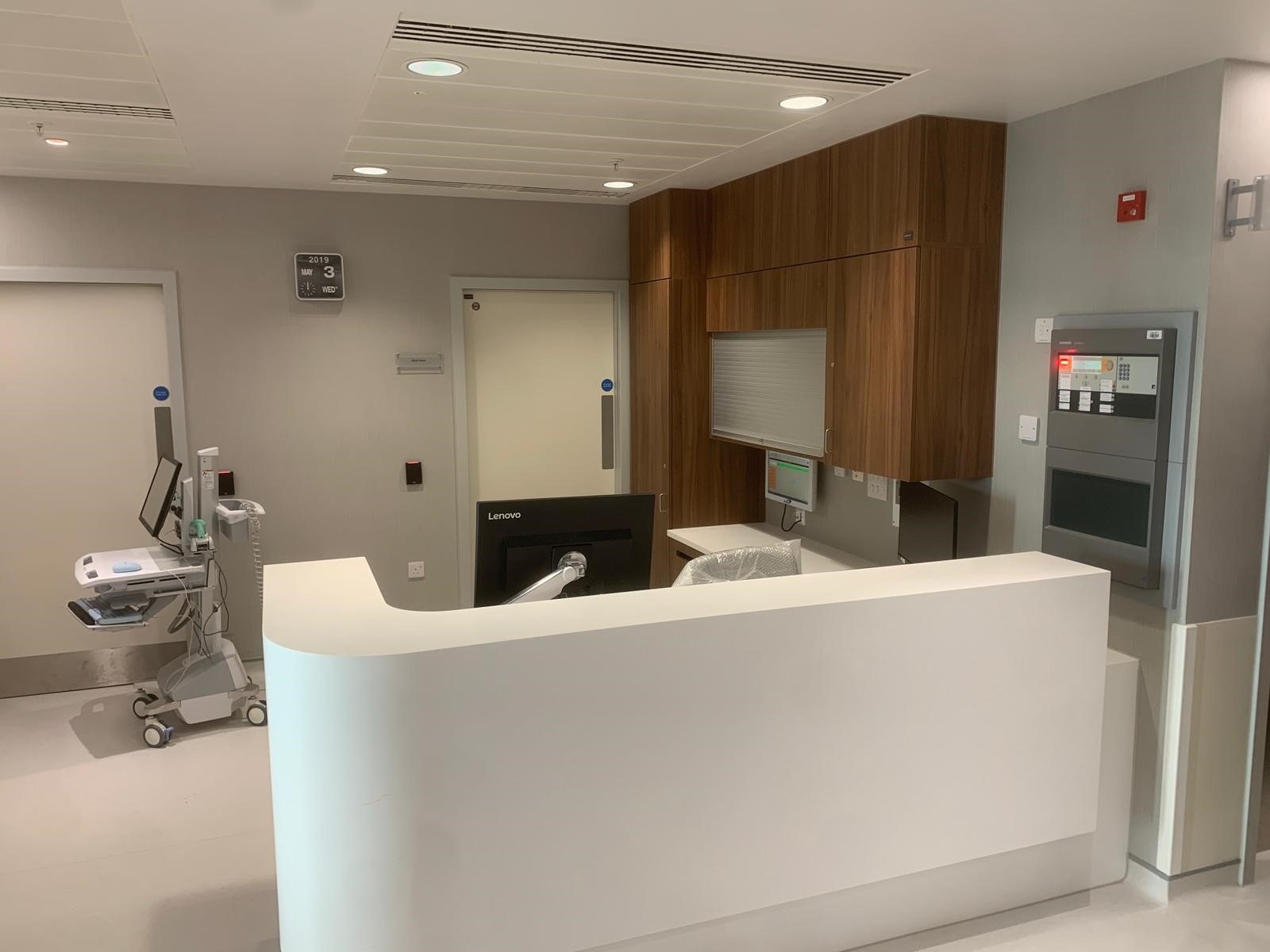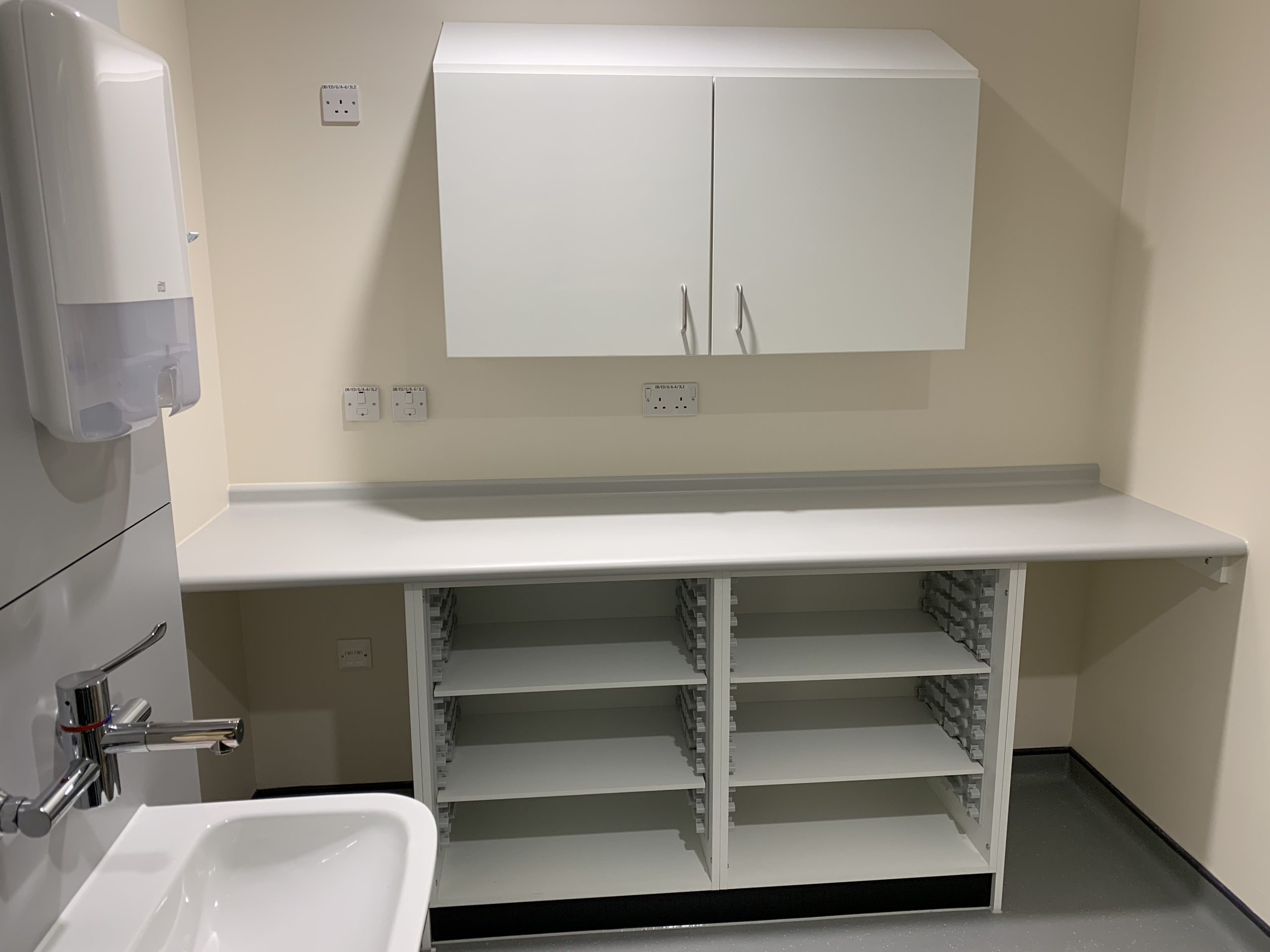
Most hospital environments are designed, reviewed and photographed during the day, when departments are fully staffed, natural light floods through windows, support services are readily available and visitors are moving throughout the building. It is an environment that reflects how hospitals are intended to operate, but healthcare never stops. It therefore raises an interesting question - if hospitals operate around the clock, why do we often design their environments around daytime conditions, writes Katie Thompson, business development manager at David Bailey Furniture Systems?
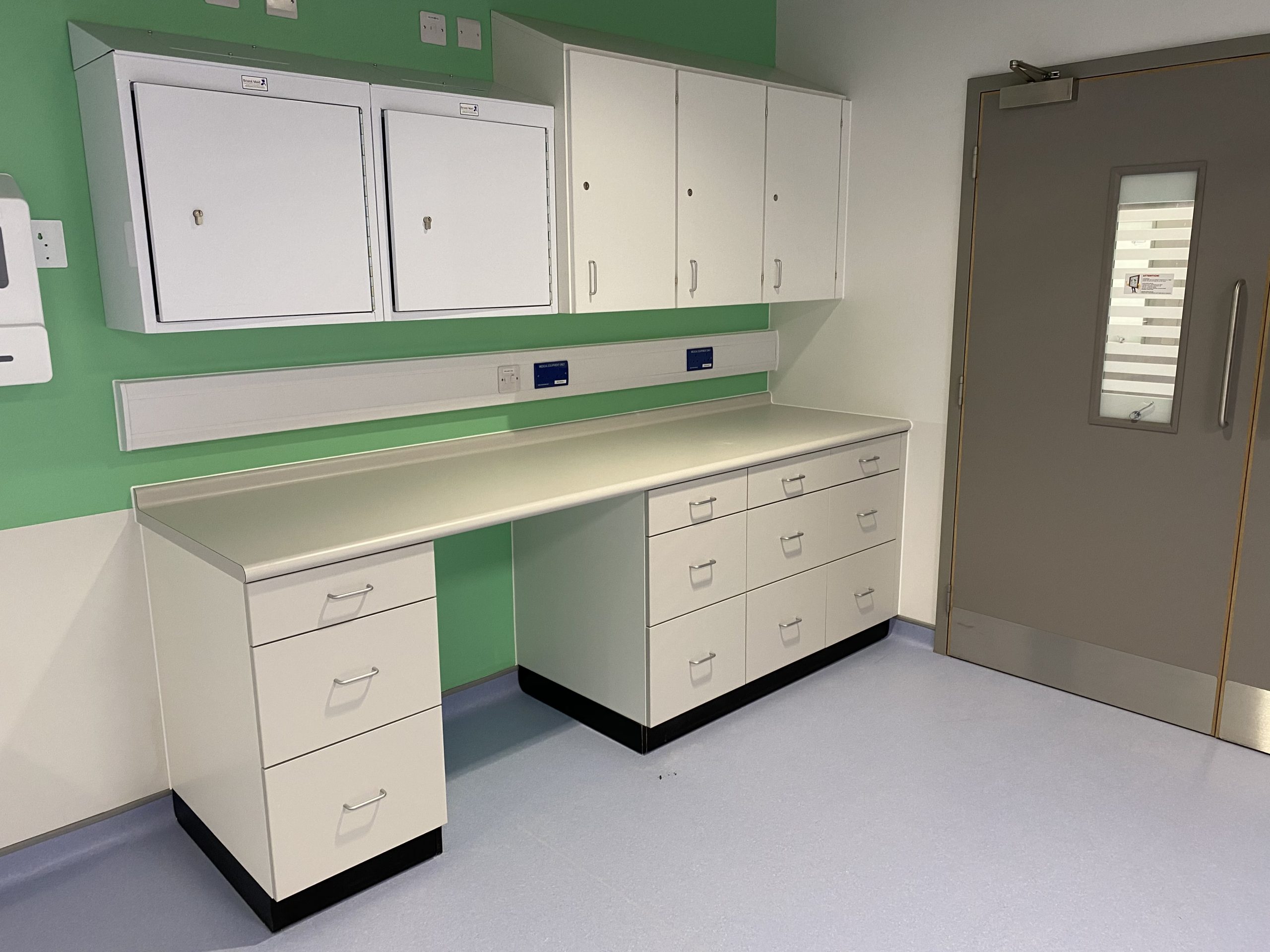
A project manager’s guide to Healthcare Furniture Standards
For architects and specifiers, fitted healthcare furniture is far more than a collection of cabinets, worktops and storage units. In a clinical environment, it has to perform within demanding operational conditions while supporting infection control, durability, cleaning, accessibility and maintenance requirements. That makes healthcare furniture compliance something that needs to be addressed at the specification and design stage and not left until procurement or installation, writes Steve Bage, Business Co-Ordinator at David Bailey Furniture Systems.
at David Bailey Furniture.
NHS England’s Health Building Notes (HBNs) support the briefing and design of healthcare buildings, while Health Technical Memoranda (HTMs) provide specialist guidance on healthcare facilities and their engineering and operational requirements.
For architects, healthcare planners and project managers, the challenge is turning those requirements into a clear specification and then ensuring that what is manufactured and installed matches it.
This is because a common mistake with healthcare furniture specification is treating compliance as a product-selection exercise – and this should not be the case. By that stage, room layouts may already have been agreed, services coordinated and procurement started. Introducing new requirements late in the process can mean redesign, substitutions and programme delays.
Instead, the performance requirements should be established at the outset. The specification should consider the intended clinical environment, cleaning regime, frequency of use, loading requirements, storage needs, accessibility and the relevant HBN and HTM guidance.
It should also define how compliance will be demonstrated. Terms such as “healthcare standard” or “clinical quality” are open to interpretation. A strong specification identifies the required performance and the evidence needed to demonstrate it.
Design for the environment
Healthcare furniture needs to withstand conditions that would be unusual in many other commercial environments. A clinical storage system, for example, may be opened and closed repeatedly throughout the day and subjected to regular cleaning and disinfection. Work surfaces may need to withstand intensive use, while finishes need to remain durable without creating difficult-to-clean areas.
HBN 26 provides a useful example. It states that storage units and shelving should comply with HTM 71 and highlights requirements around strength, resistance to surface cracking and absorption, hygienic finishes and the ability to disinfect movable units. It also identifies the importance of smooth, washable and hard-wearing work surfaces.
For the specifier, this means material selection, construction, cleanability and durability, all need to be considered alongside appearance and dimensions.
Healthcare furniture should also be included within the technical coordination programme rather than treated as a finishing item. This is particularly important with fitted healthcare furniture, where cabinets, workstations and storage systems may interface directly with walls, floors, services and clinical equipment.
Early coordination allows the design team to resolve dimensions, access, fixing arrangements and service interfaces before they become site issues. It also supports future flexibility as per HBN 00-01, which provides general design guidance for healthcare buildings and addresses future-proofing within healthcare capital projects.
For a project manager, bringing the furniture manufacturer into the process early can therefore reduce the risk of late design changes and ensure the furniture package develops alongside the wider building design.
Third-party certification
Certification and test evidence can further provide important assurance, but the critical issue is understanding exactly what the evidence demonstrates. When assessing a healthcare furniture manufacturer, architects and specifiers should establish:
- What product or component has actually been tested?
- Which standard or test method was used?
- Does the test apply to the configuration being specified?
- Who conducted the testing?
- Is the certification current?
- Does the evidence relate to the actual product being supplied?
This is particularly important for HTM 63 furniture, HTM 71 storage systems, clinical workstations and other specialist healthcare furniture, where a certificate should support a clearly defined requirement within the specification. It should not be treated as a blanket statement that every product manufactured by a company is compliant. The objective is to establish a clear link between the specification, the product and the supporting evidence.
This is because many problems arise from gaps between what was specified and what is eventually manufactured or installed. One common mistake is specifying a broad requirement without stating how it will be verified. Another is accepting a manufacturer’s claim that a product is “healthcare compliant” without examining the supporting evidence.
Substitution can create another problem. Changing a worktop material, edging detail, component or fixing method may appear minor, but where test evidence relates to a particular configuration, the change needs to be assessed.
There is also an important distinction between product compliance and project compliance. A product may meet its specified performance requirements, but the way it is installed or integrated into the room can still create problems. Good fitted healthcare furniture design therefore considers the product, installation and surrounding environment as part of the same specification.
Quality assurance during manufacturing
Furthermore, compliance does not stop when the specification is approved. For bespoke fitted healthcare furniture, quality assurance during manufacturing should demonstrate that the finished product reflects the approved design and specification. This includes control of materials, dimensions, construction methods, hardware, finishes and assembly.
Consistency is particularly important where large quantities of fitted furniture are manufactured for a healthcare project. Variations between units can affect installation, alignment, appearance and performance.
A robust fitted healthcare furniture manufacturer should be able to demonstrate how the approved specification is translated into manufacturing information and how products are checked before dispatch. Useful project documentation can include approved drawings, material specifications, product data, test reports, certification, samples and inspection records.
However, correct manufacture is only one part of achieving the required result. Healthcare fitted furniture installation can involve interfaces with walls, floors, services and clinical equipment. Incorrect fixing, unsuitable substrates or unapproved site modifications can undermine the performance of correctly specified furniture. Installation should therefore form part of the project’s quality assurance process.
The handover documentation should also provide a clear record of what has been supplied and, where appropriate, the evidence supporting its specified performance.
For architects and specifiers, compliance should not be treated as a paperwork exercise that happens at the end of a project. The best approach is to bring technical requirements into the design from the beginning.
That means specifying furniture that supports clinical workflows, withstands intensive use, can be effectively cleaned and maintained, and integrates with the building around it.
For healthcare furniture manufacturers and specifiers, the principle is straightforward – define the performance requirements, verify the evidence, control the manufacturing process and protect the specification through installation. When those stages are properly connected, compliance becomes part of good healthcare design rather than a final check before handover.
Related Posts